
Quick Answer:
Your TIG arc wanders because of contaminated tungsten, wrong tungsten type or size, incorrect grind angle, electromagnetic interference, dirty metal, or poor gas coverage. To fix it, regrind or replace your tungsten, use the right type (2% lanthanated is best), grind tip properly, improve gas flow, and keep your workpiece clean and grounded well.
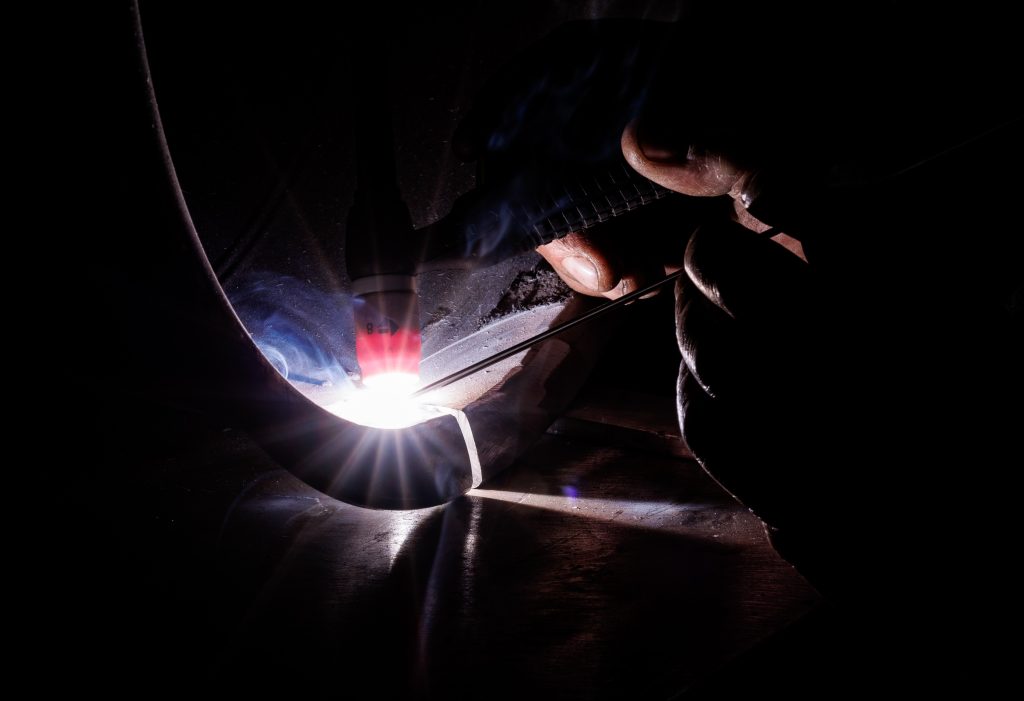
Why the TIG Arc Wanders (Real Causes)
A wandering arc usually means the arc can’t stay focused, and that always points to something wrong with:
- The tungsten
- The grind
- The gas coverage
- The workpiece cleanliness
- The ground connection
Below are the exact causes and how to fix each one.
Step-by-Step Fixes for a Wandering TIG Arc
1. Regrind or Replace Your Tungsten
This is the #1 reason your TIG arc won’t hold steady.
Signs your tungsten is contaminated:
- Arc pulls to one side
- Arc flickers
- Arc is wide and unstable
- Tungsten has black spots or melted glob
How to fix:
- Cut off the contaminated end.
- Regrind the tungsten lengthwise (never sideways).
- Sharpen to a point for DC, slight ball/point for AC.
If contamination keeps happening → check your filler technique or gas coverage.
2. Grind the Tungsten Properly
The grind direction controls the arc direction.
Correct method:
- Grind lengthwise (parallel to the electrode)
- Use a dedicated tungsten wheel or belt
- Keep a smooth taper
Incorrect method:
Cross-grinding will cause the arc to jump in random directions.
3. Use the Right Tungsten Type
Some tungsten blends are more stable than others.
Best all-around choice:
- 2% Lanthanated (blue) — stable arc, lasts longer, works on both AC/DC.
Other options:
- Ceriated — good for low-amp work
- Thoriated — excellent for DC (but slightly radioactive)
- Pure tungsten — only for AC (but not as stable)
Using the wrong type can cause flicker and drift.
4. Check Your Gas Coverage
Poor gas flow makes the arc unstable.
Fixes:
- Set flow rate around 15–20 CFH
- Ensure gas is actually flowing
- Use a larger cup (e.g., #7–#12) for better shielding
- Add a gas lens for smoother flow
- Check for gas leaks or cracked torch components
Also make sure your torch angle (work angle) isn’t too steep—10–15° is ideal.

5. Clean the Metal Better
Contaminants push the arc around.
Wipe or clean:
- Mill scale
- Rust
- Oil/grease
- Anodizing (on aluminum)
- Paint
Use a flap disc, wire brush (dedicated for aluminum), or acetone before welding.

6. Shorten Your Arc Length
If you hold the tungsten too far away, the arc widens and wanders.
Ideal arc length:
- About 1× the tungsten diameter (e.g., 1/8″ tungsten → 1/8″ arc)
Too far = unstable
Too close = tungsten contamination
7. Check Your Ground Clamp
Bad grounding causes arc blow or inconsistent arc starts.
Make sure:
- Clamp is on clean metal
- Clamp is solid and not burning inside
- Cable isn’t damaged
Poor ground = wandering arc.
8. Watch for Electromagnetic Interference (Arc Blow)
Even with TIG (less common than stick), arc blow can happen if:
- Ground is too far from the weld
- The weld is at the end of a long piece
- Strong magnetic fields are nearby
- You’re welding on cast iron or thick steel
Fix:
Move the ground clamp closer to your work area or on the opposite side of the joint.
Common Causes of TIG Arc Wandering
- Contaminated tungsten
- Wrong tungsten type
- Tungsten ground sideways
- Too long of a stick-out
- Torch angled too much
- Poor shielding gas coverage
- Drafts blowing away your gas
- Metal not cleaned properly
- Wrong polarity (DCEN for steel)
- Bad ground connection
- Welding near magnets
Tools Needed to Fix TIG Arc Wandering
- Tungsten grinder or bench grinder
- Fresh tungsten electrodes (2% lanthanated preferred)
- Gas lens kit
- Variety of cups (#5–#12)
- Acetone and clean rags
- Stainless wire brush (for aluminum only)
- Flowmeter to check gas
- Flap disc or grinder
- Good ground clamp
How to Know When Your Arc Is Perfect
A stable TIG arc should:
- Be narrow and centered
- Hold steady even if you move slightly
- Make a consistent hissing sound
- Not drift left or right
- Not flicker or flare
If you get that nice focused cone shape—you’re good.
FAQ: TIG Arc Wandering
1. Why does my TIG arc jump to the side?
Your tungsten is contaminated or ground incorrectly. Regrind it lengthwise to a clean, sharp tip.
2. Why does my arc get unstable at low amps?
Use 2% lanthanated or ceriated tungsten—they hold a stable arc at low amperage.
3. Can bad gas cause a wandering arc?
Yes. Low gas flow, leaks, or drafts can disrupt the arc.
4. Why does tungsten keep getting dirty?
You may be touching the puddle, holding too long of an arc, or your gas coverage is weak.
5. Does polarity matter for arc stability?
Yes. For most metals:
- DCEN (torch negative) gives the most stable arc
Using DCEP by mistake = instant instability.
6. Why does my arc wander only on aluminum?
Likely tungsten contamination, poor gas coverage, or too small of a cup on AC.
Final Thoughts
A wandering TIG arc is almost always caused by tungsten issues, gas flow problems, or dirty metal. Fix those and your arc will lock in like it should.
Just remember the simple formula:
Clean tungsten + correct grind + good gas coverage + clean metal = steady arc.