
Quick Answer:
For vertical up stick welding, the best settings are typically:
- Electrode: 7018 or 6010
- Amperage for 7018 (1/8″): 90–110 amps
- Amperage for 6010 (1/8″): 75–95 amps
- Polarity: DCEP (reverse polarity)
- Technique: Tight arc, slight weave, pause at the sides
If your vertical welds look messy, sagging, or full of undercut, it’s usually because of too much heat, too long of an arc, or welding too fast.
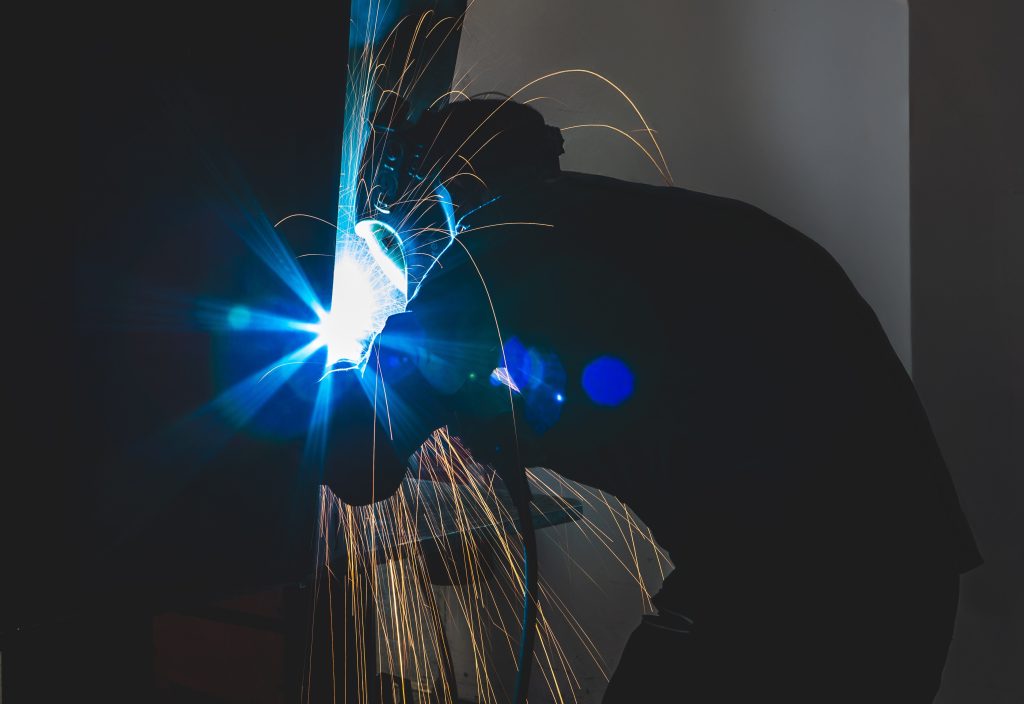
Best Vertical Up Stick Welding Settings (Explained)
1. Electrode Choice
- 7018: Clean, strong, smooth—ideal for structural work.
- 6010/6011: Great for penetrating dirty or rusty steel.
2. Amperage Settings
For 1/8″ Rods (most common for vertical)
- 7018: 90–110 amps
- 6010: 75–95 amps
- 6011: 80–100 amps
For 3/32″ Rods (when you need tighter control):
- 7018: 70–90 amps
- 6010: 60–85 amps
3. Polarity
- DCEP (reverse polarity) for almost all vertical up stick welding.
This gives a hotter arc and better penetration.
4. Travel Speed
- Slow and steady.
- Pause slightly at the sides to build the shelf and fill edges.
5. Weave Pattern
For vertical up:
- Small upside-down “V”
- Triangle pattern
- Or tiny Z weave
The key: Keep the puddle controlled, not running downhill.
How to Vertical Up Stick Weld (Step-by-Step)
Step 1: Set Your Machine
- Choose DCEP
- Set amps based on rod size (start low, bump up slowly)
Step 2: Prep the Metal
- Grind clean to shiny metal
- Remove paint, rust, oil, and mill scale
- Bevel edges for thick steel (¼” or more)
Step 3: Strike and Control Your Arc
- Use a short arc—about the thickness of the flux
- Lean the rod upward around 5–15°
Step 4: Build a Shelf
Every few seconds, pause at the side to build a shelf of molten metal.
This shelf supports the puddle on the way up.
Step 5: Use a Tight Weave
For 7018, a small weave works best:
- Move up slightly
- Pause on the right
- Move up
- Pause on the left
This prevents undercut and sagging.
Step 6: Watch the Puddle, Not the Arc
You want the puddle to freeze as you move up.
If it’s running downhill, you’re too hot or weaving too wide.
Common Mistakes in Vertical Up Stick Welding
1. Running Too Hot
- Causes sagging, dripping, or undercut
- Solution: Drop amps 5–10 at a time
2. Weaving Too Wide
A wide weave makes the puddle uncontrollable.
Stick with ¼”–⅜” wide, max.
3. Long Arc Length
- Causes spatter and porosity
- Makes the weld too hot
- Keep arc tight
4. Moving Too Fast
Vertical up is slower than flat.
Rushing leads to:
- Lack of fusion
- Cold lap
- Ugly bead shape
5. Not Pausing on the Sides
Without pauses, the weld edges become undercut.
Tools You Need for Vertical Up Stick Welding
- Stick welder (capable of DCEP)
- 7018 or 6010 rods
- Angle grinder
- Wire brush / chipping hammer
- Welding hood with good visibility
- Gloves, jacket, boots
- Clamps for positioning metal
- Welding table or stand
FAQ — Vertical Up Stick Welding
What is the best rod for vertical up?
7018 for clean, structural steel.
6010 for dirty or rusty metal.
Why is my vertical weld sagging?
Your settings are too hot, or you’re not pausing long enough on the sides.
Should I push or pull?
For vertical up, you push upward, leading the puddle.
Can beginners weld vertical up?
Yes—start with 3/32″ 7018 because it gives you more control.
Why does 7018 keep sticking on vertical welds?
Usually too cold or holding too long an arc.
Increase amps by 5–10 and hold a tighter arc.
Final Thoughts
Vertical up welding is one of the hardest stick welding positions, but with proper settings, tight control, and the right weave, your beads will come out strong and clean. Start with the recommended amperage, adjust slowly, and focus on controlling the molten puddle—not rushing it.
If you want, I can write more welding articles or help build your welding-focused website content.