
Quick Answer:
For thin aluminum (0.040–1/8”), the best TIG settings are:
- AC mode
- Amperage: 1 amp per 0.001” of thickness (with a foot pedal)
- AC balance: 70–75% EN (cleaning 25–30%)
- AC frequency: 100–150 Hz
- Gas: 100% argon at 15–20 CFH
- Tungsten: 2% lanthanated, 3/32” or 1/16”
- Filler rod: 4043 or 5356, matching material thickness
These settings give you a stable arc, tight heat control, and clean puddle when welding thin aluminum.
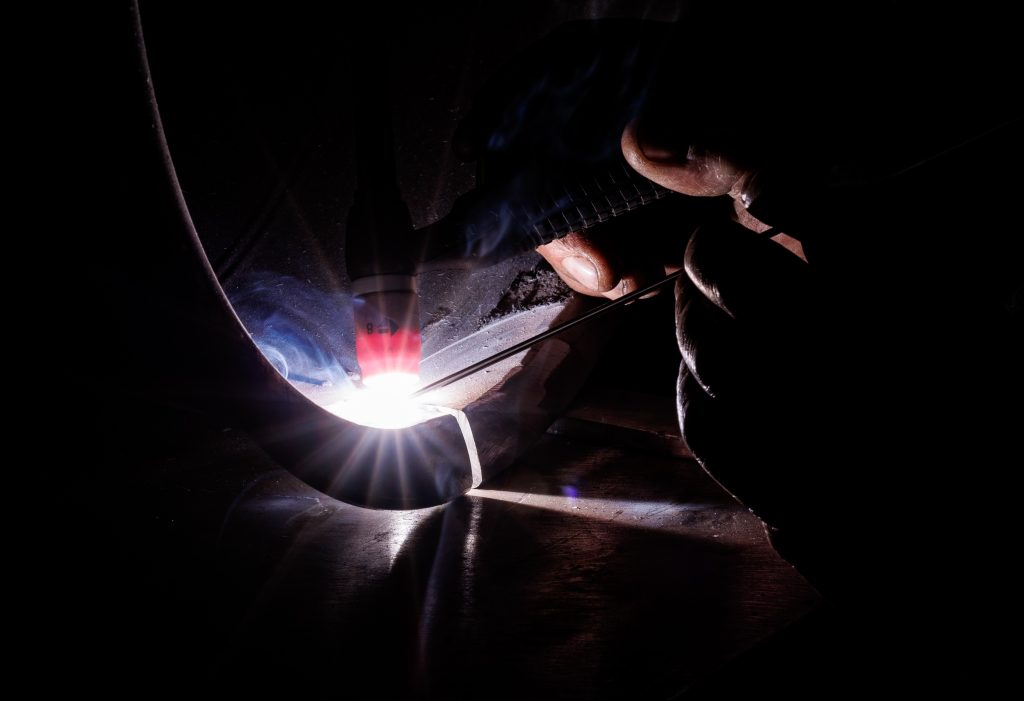
Best TIG Settings for Thin Aluminum – Full Guide
Thin aluminum is unforgiving. It heats up fast, blows out even faster, and if your settings are off by a little, the weld either doesn’t fuse—or it melts through. This guide breaks down the simplest, most reliable settings you can use and how to tweak them based on what you’re working with.
Recommended TIG Settings by Thickness
| Thickness (Aluminum) | Amps (with pedal) | AC Frequency | AC Balance (EN%) | Tungsten Size |
|---|---|---|---|---|
| 0.040” (1mm) | 40–55 A | 120–150 Hz | 70–75% EN | 1/16″ |
| 1/16” (1.6mm) | 55–80 A | 100–130 Hz | 70–75% EN | 1/16” or 3/32” |
| 3/32” (2.4mm) | 90–130 A | 80–120 Hz | 70–75% EN | 3/32″ |
| 1/8” (3.2mm) | 125–180 A | 80–100 Hz | 70–75% EN | 3/32″ |
Tip: Always set your machine a little higher than you think and control the heat with your foot pedal.
Step-by-Step Setup for TIG Welding Thin Aluminum
1. Set Your Machine to AC
Aluminum needs AC to break up the oxide layer.
- EN (electrode negative) = penetration
- EP (electrode positive) = cleaning action
For thin aluminum, you want more EN to keep heat controlled.
2. Dial in Amperage (Start at 1 amp per thousandth)
Example:
- 0.063” aluminum → ~60–70 amps
Fix for overheating: Drop 5–10 amps or move faster.
Fix for cold welds: Add 5–10 amps or reduce travel speed.
3. Set AC Frequency
Higher AC frequency tightens and narrows the arc.
- 100–150 Hz is the sweet spot for thin aluminum.
Fix for wide, sloppy puddles: Raise frequency.
Fix for noisy arc: Lower frequency or regrind tungsten.
4. AC Balance (Cleaning vs Penetration)
Start at:
- 70–75% EN (25–30% cleaning)
More cleaning only if:
- The surface is dirty
- You see black soot forming
Avoid too much EP—it overheats tungsten fast.
5. Gas Settings
- 100% argon
- 15–20 CFH
- Use a gas lens for tight access and smoother shielding.
Fix for black soot or arc wandering:
- Increase gas flow slightly
- Check for drafts
- Check cup size (use #7–#10)
6. Tungsten Setup
Best choice: 2% lanthanated (blue).
- Size: 1/16” for very thin, 3/32” for most work
- Tip shape: Sharpened to a point with a slight flat
Fix for a dancing/unstable arc:
- Regrind tungsten
- Ensure proper taper
- Lower EP (increase EN%)
7. Filler Rod Selection
Stick with:
- 4043 (most forgiving)
- 5356 (stronger but stiffer)
Rod size:
- 1/16” for thin pieces
- 3/32” for 1/8″
Fix for melting the rod: Keep the rod in the gas envelope and dip faster.
Common Mistakes When TIG Welding Thin Aluminum
1. Using DC Instead of AC
This is the #1 beginner mistake.
You must use AC for aluminum unless you’re using helium or doing AC+DC hybrid tricks—not for beginners.
2. Too Much Heat / Slow Travel
Thin aluminum dumps heat everywhere and overheats fast.
Solution: Move steadily, use a pedal, or pulse if available.
3. Wrong Tungsten Prep
Rounded or contaminated tungsten → sloppy arc.
Always grind with the scratches running lengthwise.
4. Bad Fit-Up
Even tiny gaps blow out on thin aluminum.
Use clamps, magnets, and tight joints.
5. Poor Cleaning
Aluminum needs to be:
- Degreased
- Wire brushed (stainless brush)
- Wiped with acetone
Dirty metal → black smut and messy puddles.
6. Wrong Gas Flow
Too low → dirty weld
Too high → turbulent weld
Stay around 15–20 CFH.
7. Holding the Torch Too Far Away
Keep arc length tight—about 1/8″ or less.
Tools & Gear You Need
Welding Machine
- AC-capable TIG machine
- Foot pedal
Consumables
- 2% lanthanated tungsten
- Argon gas
- 4043/5356 filler rods
- Gas lens kit (#7–#10 cups)
Prep Tools
- Stainless steel wire brush
- Acetone + clean rags
- Deburring tools
- Clamps/magnets
Safety Gear
- Auto-dark helmet (Shade 10–12)
- Welding gloves
- FR jacket or sleeves
- Safety glasses
- Good ventilation/fume extraction
FAQ: Best TIG Settings for Thin Aluminum
1. What’s the best AC balance for thin aluminum?
70–75% EN is ideal—enough penetration without overheating.
2. Why does my aluminum keep blowing through?
Too much heat or too slow travel. Drop amps or move quicker.
3. Why are my welds turning black?
Likely gas issues: too little flow, drafts, or poor cleaning.
4. What tungsten is best for aluminum?
2% lanthanated—handles AC well and doesn’t ball up as easily.
5. Should I use pulse for thin aluminum?
Optional, but 1–1.5 PPS helps heat control.
6. How do I get a tighter bead?
Raise AC frequency (100–150 Hz), sharpen tungsten, shorten arc length.
7. Why is my puddle sluggish?
Dirty metal or too much cleaning action. Wire brush and reduce EP.
Final Thoughts
TIG welding thin aluminum can be tricky, but once your settings are dialed in—and you practice controlling heat—you’ll see big improvements fast. Stick to AC, stay around 100–150 Hz, keep your tungsten sharp, and clean the metal like crazy. The rest is just seat time.