
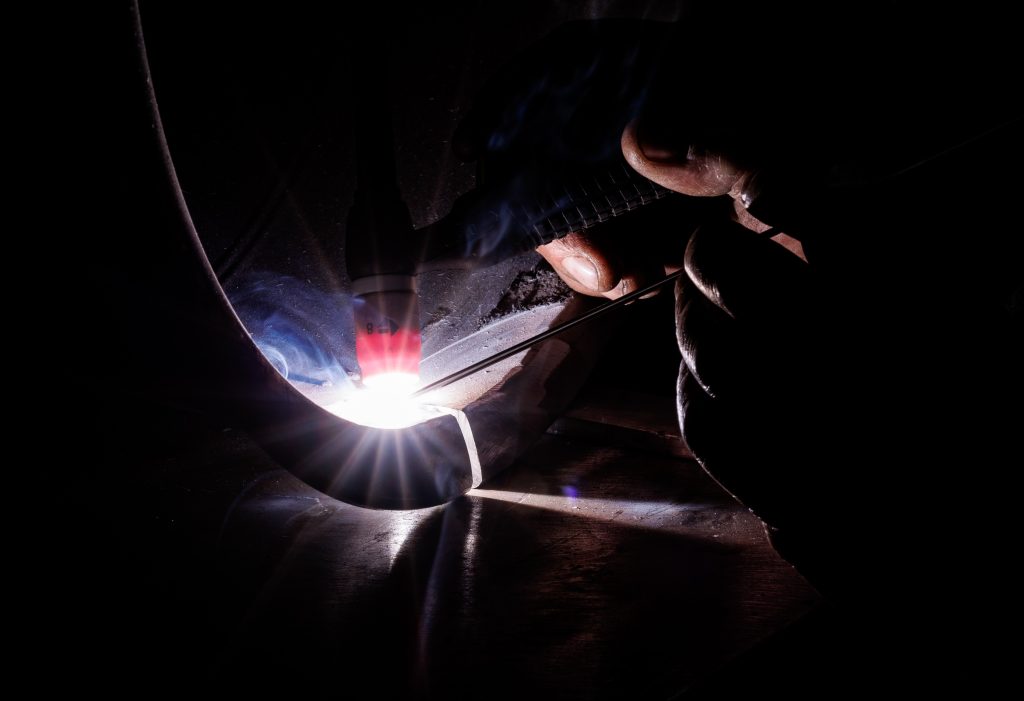
Your tungsten keeps contaminating because you are touching the puddle, touching the filler rod, running with too long of an arc, or welding with dirty metal, wrong gas flow, or incorrect tungsten type or prep. In most cases, tungsten contamination comes from technique issues or poor setup.
Why Your Tungsten Keeps Contaminating — Full Guide
TIG welding is picky. Even one little mistake will turn your tungsten black, fuzzy, or balled up. When tungsten gets dirty, your arc wanders, your weld looks dull, and the puddle gets sluggish.
Here are the real reasons it happens and how to fix every one.
✅ 1. You’re Touching the Tungsten to the Weld Pool (Most Common)
Even the best welders dip their tungsten once in a while.
How it happens:
- You dip the tip into the molten puddle
- You dab filler rod too close
- Your torch angle is too low
- You run out of focus and drop your hand
How to Fix It:
- Keep a consistent 1/8-inch arc length
- Don’t point the torch downward too steeply
- Anchor your hands to stay steady (pinky or palm on the table)
- Keep the filler rod below the arc, not above it
✅ 2. Your Filler Rod Is Touching the Tungsten
If your wire hits the tungsten, it instantly sucks molten metal onto the tip.
How to Fix:
- Feed rod from the side, not straight at the arc
- Keep a smooth rhythm: torch-steady → dab → move
- Don’t hold the rod up high in the arc stream
✅ 3. Your Metal Is Dirty
TIG welding is extremely sensitive to contamination.
Dirty metal causes:
- Black tungsten
- Popping arc
- Grainy, dirty puddle
Fix:
- Clean stainless with acetone
- Remove paint, rust, mill scale
- On aluminum: use a stainless wire brush only for aluminum
✅ 4. Wrong Gas Flow or Bad Gas Coverage
If the tungsten isn’t shielded by pure argon, it oxidizes instantly.
Causes:
- Gas flow too low
- Gas flow too high (turbulence sucks in air)
- Drafts in the shop
- Leaks in torch or hoses
- Wrong gas (argon/CO₂ mix—MIG gas—won’t work)
Fix:
- Set gas flow to 15–20 CFH
- Use 100% argon for TIG
- Move away from fans or doors
- Check hoses for leaks
- Use a gas lens (way smoother shielding)
✅ 5. Wrong Tungsten Type or Prep
The wrong tungsten will spit, ball, or contaminate fast.
General Rules:
- DC welding (steel, stainless):
Use 2% lanthanated (blue) or 2% thoriated (red)
Grind to a sharp point. - AC welding (aluminum):
Use 2% lanthanated
Light taper or blunt tip.
Fix:
- Grind tungsten lengthwise on a dedicated wheel
- Don’t use a grinding wheel you use for steel
- Make a clean tip with no chips or grooves
✅ 6. Arc Length Too Long
Long arc = unstable arc = contamination magnet.
Fix:
- Keep it tight: 1/8 inch or less
- Watch the puddle, not the tungsten
✅ 7. Wrong Torch Angle
If your torch angle is too low, the arc blows contaminants back onto the tungsten.
Fix:
- Keep a 10–15° push angle
- Never drag the torch
🔧 Step-by-Step Fixes to Stop Tungsten Contamination
Step 1 — Regrind or Replace Your Tungsten
Once it’s contaminated, it will not clean itself.
Step 2 — Clean the Metal Properly
Grind, sand, wipe with acetone (non-chlorinated).
Step 3 — Set Your Gas Flow to 15–20 CFH
And confirm you’re using 100% argon.
Step 4 — Fix Your Torch Angle
Aim for a slight push angle, not a steep lean.
Step 5 — Keep a Tight Arc
Stay close to the puddle without dipping.
Step 6 — Learn Smooth Filler Rod Technique
Keep the rod below the arc; dab consistently.
Step 7 — Remove All Drafts
No fans, open doors, AC vents, or wind blowing.
Step 8 — Use the Right Tungsten & Prep
Sharpen for steel; slight blunt tip for aluminum.
⚠️ Common Beginner Mistakes Causing Tungsten Contamination
- Holding the torch too low
- Pushing the filler rod into the tungsten
- Long arc
- No gas lens
- Too much gas flow
- Using MIG gas by mistake
- Grinding tungsten on a dirty wheel
- Touching tungsten to the puddle
- Wrong polarity
- Dirty metal or filler rod
🧰 Tools You Need for Clean Tungsten Welding
- 2% Lanthanated tungsten
- TIG torch with gas lens kit
- Dedicated tungsten grinder or bench grinder wheel
- Acetone (non-chlorinated)
- Stainless steel wire brush (for aluminum only)
- Clean filler rods
- Flowmeter (set 15–20 CFH)
- 100% argon tank
- Gloves + steadying blocks for hand positioning
❓ FAQ — Why My Tungsten Keeps Contaminating
1. Can I keep welding with contaminated tungsten?
You can, but you shouldn’t. Your arc will wander, welds will look oxidized, and penetration suffers.
2. Why does my tungsten turn black?
Black tungsten = poor shielding or touching the puddle.
Usually caused by gas issues or contamination.
3. Why is my tungsten balling up on DC?
You’re either:
- too hot,
- using the wrong tungsten, or
- holding too long of an arc.
4. Why does my tungsten split or crack?
This happens from overheating or grinding across the wheel instead of lengthwise.
5. Why does my tungsten get fuzzy?
That’s usually steel contamination from dipping into the puddle or touching the rod.
6. Do I need a gas lens?
You don’t need one, but gas lenses dramatically improve shielding and help prevent contamination—especially for beginners.
7. Why does my tungsten spark when it touches the rod?
Because the filler rod becomes electrically live if it touches the arc.
The metal jumps instantly onto the tungsten.