
Quick Answer (Straight to the Point)
You fix porosity in MIG welds by:
- Improving your shielding gas coverage
- Cleaning the metal before welding
- Reducing stickout to 3/8″
- Checking for gas leaks
- Avoiding drafts or wind
- Running the correct voltage and wire speed
Porosity happens when air gets into the weld puddle, so the goal is to keep oxygen, moisture, and contamination OUT of your arc.

What Porosity Is (and Why It Ruins Welds)
Porosity is when tiny gas pockets get trapped inside the weld.
It looks like:
- Pinholes
- Tiny bubbles
- Swiss-cheese-looking cavities
These pockets weaken the weld because the metal isn’t solid all the way through.
Simple explanation:
👉 If your weld is full of holes, it can’t support the load.
Step-by-Step Fixes (Do These in Order)
1. Fix Your Shielding Gas Coverage (Most Common Cause)
Your weld puddle needs a clean gas blanket.
Check your gas flow:
- Set it to 20–25 CFH
- Too low → porosity
- Too high → gas turbulence pulls air in
Confirm the gas is actually flowing:
- Valve open
- Regulator not stuck
- Hose not kinked
Keep wind and drafts away:
Even a small breeze steals your gas.
Weld inside or use a windbreak.
2. Reduce Your Stickout (Keep It at 3/8″)
Long stickout = weak gas coverage.
If you’re welding with 1” of stickout, you’re basically welding with no shielding.
Fix:
- Hold the gun closer
- Aim for 3/8″ to 1/2″ max
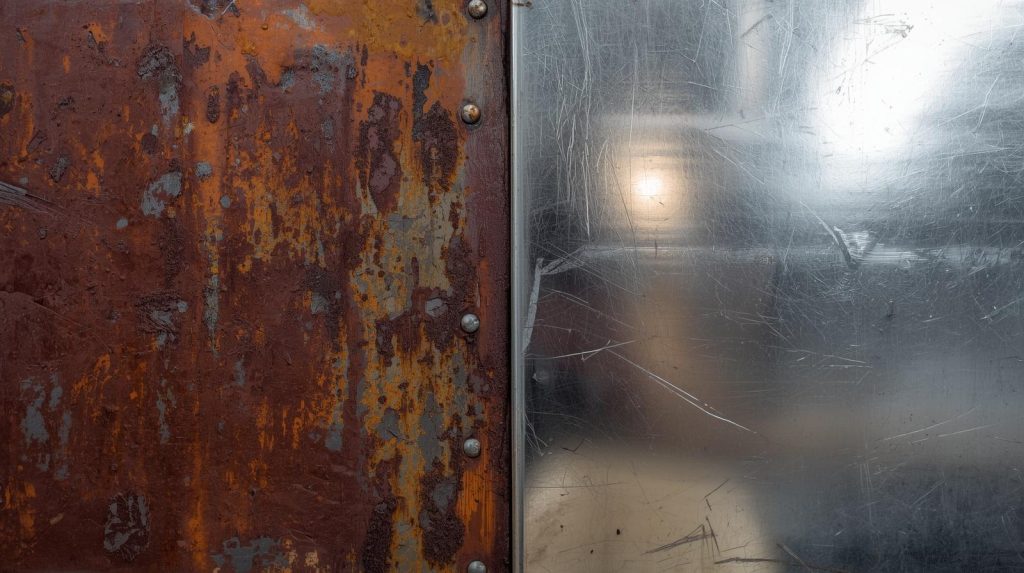
3. Clean the Metal Thoroughly
Dirty metal traps moisture and contaminants that turn into porosity.
Remove:
- Rust
- Paint
- Galvanizing
- Mill scale (heavy)
- Oil/grease
- Moisture
Use:
- Grinder
- Flap disk
- Wire brush
Clean metal = clean weld.
4. Check for Gas Leaks
Leaks kill shielding.
Look for:
- Loose fittings
- Cracked hoses
- Bad O-rings
- Leaky regulator
Fix:
Spray soapy water on the connections.
If it bubbles, it’s leaking.
5. Fix Your Travel Speed
Traveling too fast → pushes gas away → porosity
Traveling too slow → overheats and destabilizes the arc
Fix:
Find a steady pace where the bead forms a smooth, even puddle.
6. Set Correct Voltage & Wire Speed
Wrong settings = turbulent arc → sucks air in.
If you’re popping and sputtering:
- Increase voltage
- Reduce wire speed
If your arc is roaring too hot:
- Reduce voltage
You want a smooth “sizzling bacon” sound.
7. Use the Right Gas & Wire
Best gas for MIG on steel:
- 75/25 Argon/CO₂
100% CO₂ works but can increase spatter and arc turbulence if settings aren’t dialed in.
Best wire:
- ER70S-6
- Fresh, clean wire (rusty wire = porosity)
Common Mistakes That Lead to Porosity
Avoid these and you’ll fix 90% of porosity issues:
1. Welding in a breeze
Wind is the #1 porosity killer.
2. Long stickout
Kills gas coverage instantly.
3. Dirty metal
Contaminants vaporize and become trapped in the weld.
4. Wrong gas flow
Too low: no coverage
Too high: turbulence
5. Using rusty or wet wire
Bad wire = instant porosity
6. Moisture on metal
Welding wet steel creates steam inside the bead.
7. Compromised gas hoses
Leaks dilute the shielding gas.
Tools You’ll Need to Fix Porosity
Keep these on hand:
- MIG welder
- 75/25 Argon/CO₂ tank
- Regulator & flowmeter
- Angle grinder
- Flap disk / grinding wheel
- Weld wire (ER70S-6)
- Wire brush
- Soap-water spray bottle (leak test)
- MIG pliers
Pro Tips From a Welder
- Pull your wire out 1/2″ before striking
- Avoid welding near garage doors, fans, or wind
- Keep your nozzle clean — spatter buildup restricts gas flow
- Don’t bury your nozzle in the weld; let gas flow evenly
- Replace your nozzle if clogged or damaged
FAQ: How to Fix Porosity in MIG Welds
What causes tiny pinholes in MIG welds?
Most commonly:
- Long stickout
- Low gas flow
- Dirty metal
- Wind/drafts
Why do I get porosity only at the start of my weld?
Your gas coverage hasn’t built up yet.
Hold the trigger 1–2 seconds before striking the arc to pre-flow gas.
Can bad wire cause porosity?
Yes — rusty or oily wire will contaminate the weld and create holes.
Why do I get porosity when welding outside?
Wind blows away shielding gas.
Use a barrier or increase CFH slightly (25–30), or switch to flux core.
Will porosity weaken my weld?
Absolutely.
Porosity creates internal voids and can cause weld failure especially under load.
Can you weld over porosity to fix it?
No — grinding it out is the proper fix.
Then re-weld with correct settings.
Bottom Line
Porosity means air or contamination is getting into your weld puddle.
To fix it:
- Use proper gas flow
- Keep stickout at 3/8″
- Weld out of the wind
- Clean your metal
- Check for leaks
- Dial in your voltage & wire feed
Do those, and your welds will be strong, clean, and porosity-free.
If you want, I can also help you diagnose porosity based on a photo of your weld — just send it over.