
Your MIG welder keeps tripping the breaker because it’s drawing more amps than the circuit can handle, the breaker is too small, the outlet wiring is faulty, or the welder has an internal short or power spike. In most cases, the problem is simply that the welder is plugged into a 15A household circuit that can’t handle the load.
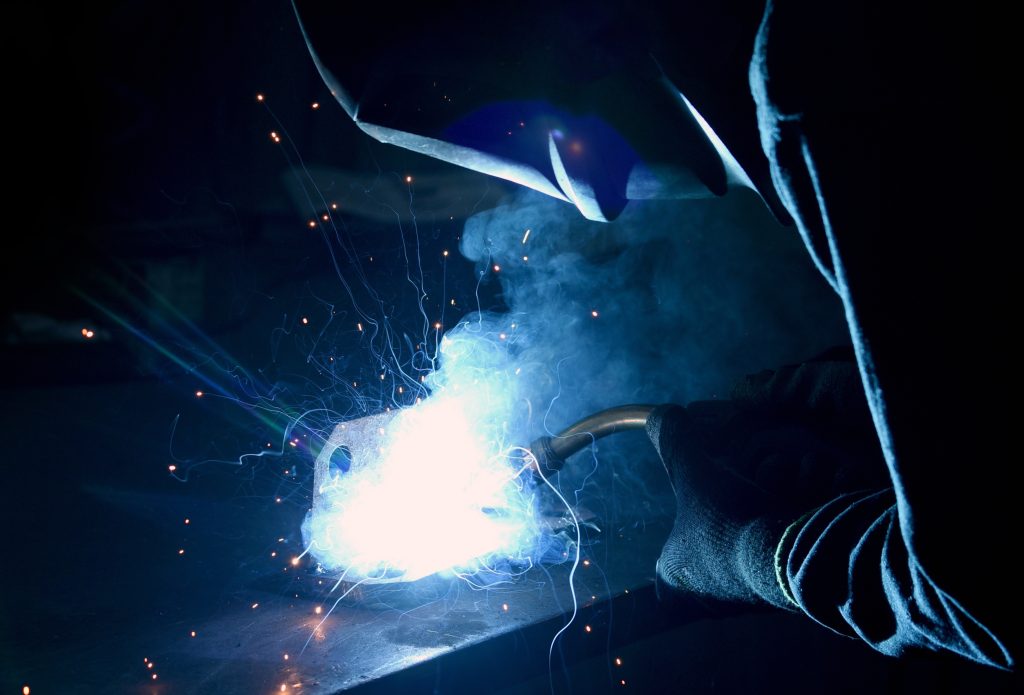
Why Your MIG Welder Keeps Tripping the Breaker — Full Guide
When a breaker trips, it’s doing you a favor—it cuts power before the wiring overheats. MIG welders pull a lot more current than people think, especially during arc start or when running hotter settings.
Here are the most common causes and how to fix them.
1. Your Circuit Is Too Small (Most Common Cause)
Most household outlets are 15A circuits.
Most MIG welders need 20A–30A minimum.
Why this trips the breaker:
A 120V MIG pulling 18–22 amps will instantly overload a 15A breaker.
Fix:
- Plug into a 20A dedicated circuit
- Or use a 240V outlet if your welder supports it
- Never run a MIG welder on a shared household circuit with other appliances
If your welder has a 20A plug (T-slot), it must go into a 20A outlet.
2. Long or Thin Extension Cords
Cheap orange extension cords cause:
- Voltage drop
- Heat buildup
- Sudden current spikes
All of which trip breakers.
Fix:
- Use no extension cord if possible
- If you must, use 10–12 gauge, short, heavy-duty cords ONLY
- Avoid cords longer than 25–50 ft
The thinner the wire → the more amps it steals → the faster the breaker goes.
3. Internal Welder Fault (Short or Overload)
Blown capacitors, damaged windings, or internal wiring issues can cause breaker trips.
Signs include:
- Breaker trips immediately when you pull the trigger
- Welder hums loudly
- Burning smell or rattling inside machine
Fix:
- Open the welder (unplug first) and check for burnt wires or loose connectors
- If unsure, take it to a repair shop
- Most budget MIG welders fail from dust and metal shavings building up inside
4. Incorrect Voltage Setting or Auto-Boost Surge
Some welders pull extra current when:
- Using “hot start”
- Running the welder maxed out
- Arc load fluctuates
Fix:
- Try lowering the voltage/wire speed
- See if the breaker stops tripping
- If it does, you’re simply maxing out the circuit
5. Faulty Outlet or Loose Wires
Loose outlet screws or bad wiring create resistance and heat—breakers hate that.
Fix:
(Only if you’re comfortable and qualified)
- Turn off power
- Remove outlet cover
- Check for burnt terminals or loose connections
- Tighten wires securely
- Replace damaged outlets immediately
If unsure → call an electrician.
6. Breaker Is Old, Weak, or Undersized
Breakers wear out over time.
A 20A breaker that’s been in a shop for 25 years may trip at 12–15 amps.
Fix:
- Replace with a new breaker of the same rating
- Check that wiring gauge matches breaker size
- Never “oversize” a breaker—this is how fires start
7. Running Other Tools on the Same Circuit
A MIG welder + grinder + lights + compressor on one 15A circuit = guaranteed trip.
Fix:
- Use a dedicated outlet
- Add a new circuit if needed (20A minimum for MIG welding)
Step-by-Step Fixes (Do These in Order)
Step 1 — Try a Different Outlet
Preferably a 20A or 240V circuit.
Step 2 — Remove Any Extension Cord
Plug the welder directly into the wall.
Step 3 — Lower Your Welding Settings
If the breaker stops tripping, the circuit is just too small.
Step 4 — Check the Breaker Rating
- 15A → too small
- 20A → ideal for 120V MIG welders
- 30A/240V → best for larger machines
Step 5 — Check the Wiring and Outlet
Look for burnt wires, loose connections, or heat marks.
Step 6 — Open and Clean the Welder
Blow out dust and metal shavings—they cause shorts.
Step 7 — Try a Different Circuit Entirely
If the machine works elsewhere, the old circuit is your problem.
Common Mistakes That Make Breakers Trip
- Using 100 ft extension cords
- Plugging the welder into a 15A kitchen outlet
- Running the welder at max power on 120V
- Sharing a circuit with other tools
- Using damaged or thin cords
- Oversizing breakers (dangerous and illegal)
Tools You’ll Need
- Heavy-duty extension cord (10–12 gauge) – if needed
- Multimeter (to test outlets)
- Screwdriver or drill (for outlet inspection)
- Air compressor or canned air (to clean welder)
- Flashlight
- Replacement breaker (same rating only)
- PPE: gloves, glasses
FAQ: MIG Welder Keeps Tripping Breaker
1. What size breaker do I need for a MIG welder?
- 120V MIG → 20A dedicated circuit
- 240V MIG → 30–50A depending on machine size
Check your welder’s manual for exact amp draw.
2. Can a 15A outlet run a MIG welder?
Rarely.
Most MIG welders require 18–22+ amps when welding.
3. Why does the breaker trip instantly when I pull the trigger?
Possible causes:
- Internal short
- Weak breaker
- Undersized circuit
- Loose outlet wiring
- Bad extension cord
4. Can bad grounding trip a breaker?
Yes.
Loose or damaged ground connections inside the welder or outlet can cause overload or short.
5. Does metal thickness affect breaker tripping?
Indirectly.
Thicker steel → hotter settings → more amperage → higher chance of tripping.
6. Can I just put in a bigger breaker?
No.
Never increase breaker size without upgrading wiring.
You can start a fire.
7. Does a 240V welder trip breakers less?
Yes.
240V circuits distribute the load better, reducing amperage draw.