
To prevent arc blow in stick welding, you need to improve your ground connection, change your work angle, shorten your arc length, and adjust where your cable is placed. Arc blow happens when magnetic fields push your arc around, so the fix is all about controlling those fields and stabilizing the arc.
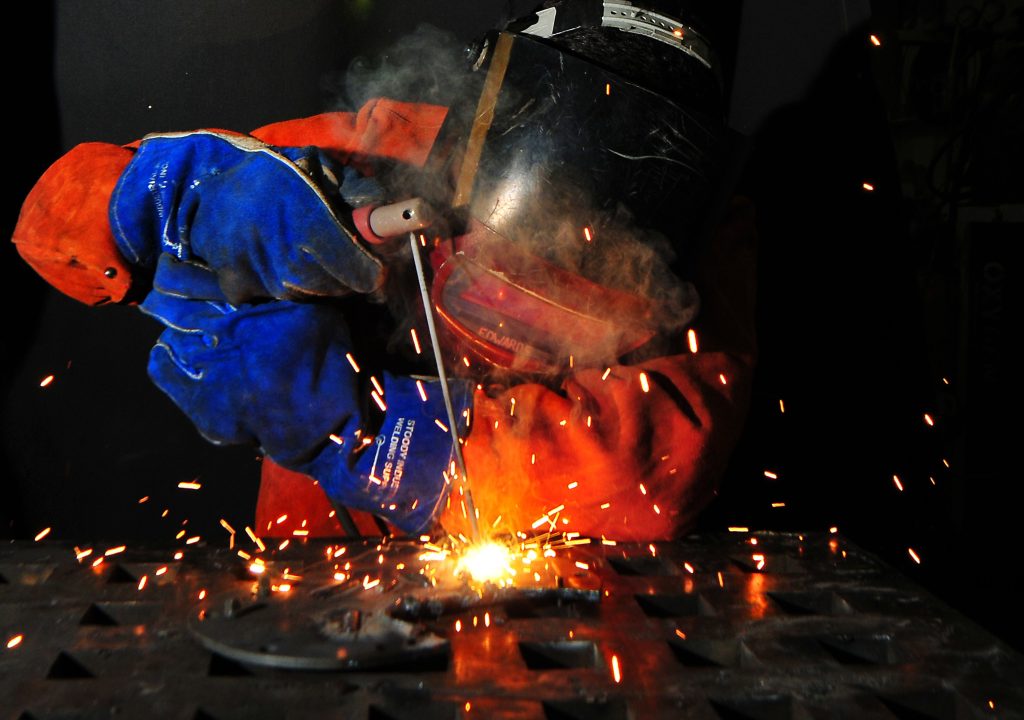
How to Prevent Arc Blow in Stick Welding — Full Guide
Arc blow is when the arc pulls to one side, jumps around, or refuses to follow your joint. It’s usually caused by magnetic buildup in the workpiece or bad cable placement.
Here’s how to stop it.
Step-by-Step Fixes for Arc Blow
1. Move Your Ground Clamp
This is the number one fix most welders use.
What to do:
- Move the ground clamp as close to the weld as possible.
- If the arc pulls left → move the ground left.
- If it pulls right → move the ground right.
- For long welds, move the ground halfway through the seam.
This reduces the magnetic path that’s twisting your arc.
2. Change Electrode Angle
A small angle change can override arc blow.
Fix:
- Keep a tight 5–15° drag angle.
- If the arc pulls away, angle slightly toward the direction it’s drifting.
You’re basically “steering” the arc back into the joint.
3. Shorten Your Arc Length
A long arc exaggerates arc blow every single time.
Fix:
- Keep the rod tight to the puddle, almost touching.
- This stabilizes the arc magnetically and mechanically.
4. Reduce the Amperage Slightly
Too much heat amplifies magnetic distortion.
Fix:
- Drop amperage by 5–10 amps.
- If the arc stabilizes, you found your sweet spot.
5. Reverse Your Travel Direction
Arc blow often appears worst at the end of a weld.
Fix:
- Weld toward the area with the most magnetic pull.
- For example: If the arc blows forward at the end of a joint, start at that end and weld backward.
6. Reposition Your Work Cable
The power cable itself can cause magnetic pull.
Fix:
- Try laying the cable parallel to the joint.
- If that doesn’t work, try crossing it over the joint.
- Avoid wrapping the cable around the workpiece.
7. Add Tack Welds or Stitch Weld
If the arc keeps kicking out of the joint:
Fix:
- Use multiple small welds instead of one long one.
- Each tack or stitch reduces magnetic buildup.
8. Demagnetize the Workpiece
If nothing else works, the metal itself may be magnetized.
Fix options:
- Use a demagnetizer tool
- Heat the part slightly
- Strike a reverse polarity arc briefly to break the magnetic field
This is usually only needed on older steel or reused plate.
Common Mistakes That Cause Arc Blow
- Ground clamp too far away
- Long arc length
- Wrong polarity for the rod
- Welding toward the end of a joint where fields get stronger
- Coiling cables around the workpiece
- High amperage on thin joints
- Leaving the workpiece magnetized from previous operations
Most of these are quick fixes if you catch them early.
Tools You’ll Need
You don’t need much—just a few basics:
- Good ground clamp (clean jaws)
- Chipping hammer and brush
- Angle grinder (clean your ground point)
- Welding magnets (avoid using them near the joint—they cause arc blow!)
- Welding leads long enough for repositioning
- Optional: demagnetizer coil
- PPE and auto-darkening helmet
FAQ: How to Prevent Arc Blow in Stick Welding
1. What causes arc blow in stick welding?
Arc blow happens when magnetic fields in the steel push or pull your arc, usually from bad grounding, long welds, poor cable placement, or magnetized metal.
2. Can polarity cause arc blow?
Yes.
- DCEP (reverse polarity) often makes arc blow worse.
- DCEN can sometimes reduce it.
- Switching to AC usually eliminates it completely.
3. Why does arc blow happen more at the end of a weld?
Because magnetic forces build up in the direction of travel, and by the end they have nowhere else to go. That’s why the arc suddenly starts pulling sideways or blowing forward.
4. Does AC welding prevent arc blow?
Mostly, yes.
AC alternates polarity 60 times per second, which breaks magnetic buildup and stabilizes the arc.
5. Can welding magnets cause arc blow?
Absolutely.
Strong magnets near the weld can send the arc wandering. Always remove them before welding.
6. Is arc blow dangerous?
Not usually, but it can:
- ruin bead appearance
- cause porosity
- lead to lack of fusion
- mess up root passes
So you definitely want to fix it.
7. What is the fastest fix?
Move your ground clamp closer.
That solves 80% of arc blow issues.