
Excess slag usually happens because of wrong rod angle, low amperage, dirty metal, or dragging the rod too slow. In most cases, the slag isn’t the real problem—your weld settings or technique are.
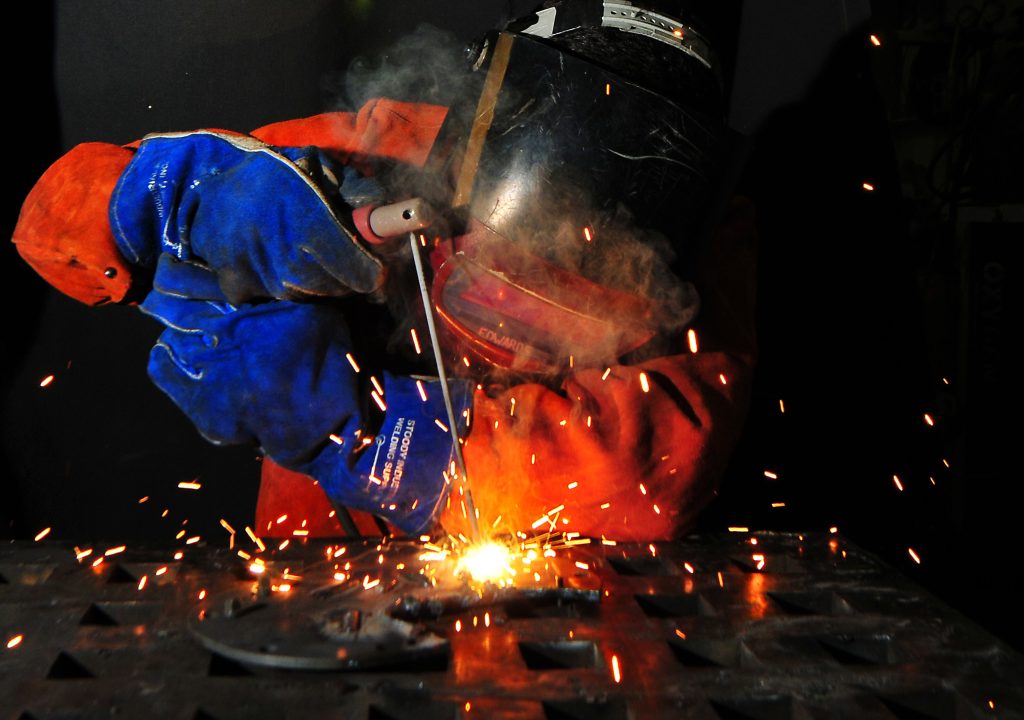
Why Your Welds Have Excess Slag — Full Breakdown
Slag is normal when stick welding, but heavy, crusty, stubborn slag is a sign something’s off. Here’s what’s usually to blame:
1. Wrong Electrode Angle
If your rod angle is too shallow or pointed the wrong way, slag rolls ahead of the puddle and gets trapped.
Fix:
- Stick welding rule: Drag the rod.
- Keep about a 15–20° drag angle, leaning slightly away from the direction you’re moving.
2. Low Amperage
Not enough heat makes the puddle cold and slow, which lets slag pile up instead of burning off.
Fix:
- Increase amperage in 5–10 amp bumps.
- Example: 7018 on 1/8″ steel usually runs around 115–135A.
3. Dirty or Painted Metal
Rust, mill scale, paint, oil, or moisture makes slag thick and unpredictable.
Fix:
- Grind to clean, shiny metal.
- Wipe with acetone or brake cleaner (non-chlorinated ONLY).
- Preheat if metal seems damp.
4. Moving Too Slow
A slow travel speed gives slag time to pool and freeze over the puddle.
Fix:
- Increase travel speed until the weld looks smooth and consistent.
- Watch the puddle edges—not the arc.
5. Wrong Rod Choice
Some rods naturally have more slag, and using the wrong rod on the wrong joint makes it worse.
High-slag rods: 6013, 7014
Low-slag rods: 6010, 6011
Medium-slag rods: 7018
Fix:
- Use the right rod for the joint and position.
- For dirty metal → 6010 or 6011
- For clean structural → 7018
6. Joint Design Too Tight
If the joint has no gap or poor prep, slag gets trapped deep in the groove.
Fix:
- Open the joint up
- Add a root gap if needed
- Bevel edges for thicker metal
Step-by-Step Fixes for Excess Slag
Step 1 — Clean Your Metal
- Grind off rust, paint, scale
- Wipe surfaces clean
- Make sure your ground clamp has solid contact
Step 2 — Check Your Amperage
- Look up the recommended range for your rod size
- Adjust in small increments until the weld wets out smoothly
Step 3 — Fix Your Angle
- Hold a 15–20° drag angle
- Keep the rod steady (avoid weaving too wide)
Step 4 — Adjust Travel Speed
- Move just fast enough that the slag trails behind the puddle
- If slag is overtaking your puddle → move faster
Step 5 — Use the Right Rod for the Job
- 6010/6011 → dirty metal, deep penetration
- 7018 → structural, clean applications
- 6013/7014 → light fabrication, sheet metal
Step 6 — Improve Joint Prep
- Add a bevel on thicker metals
- Open root gaps for penetration
- Remove old welds that trap slag
Common Mistakes That Cause Excess Slag
- Pushing the rod instead of dragging it
- Running too cold
- Trying to weld through paint or rust
- Too much weaving
- Using a high-slag rod in tight joints
- Welding with damp electrodes
- Not cleaning between passes
Tools You’ll Need
- Angle grinder (flap disc + grinding wheel)
- Wire brush (manual or cup brush on grinder)
- Rod oven or dry storage container
- Welding helmet + PPE
- Second rod type for testing (ex: 7018 and 6011)
- Acetone or brake cleaner (non-chlorinated)
- Chipping hammer
FAQ: Why My Welds Have Excess Slag
1. Why does my 7018 weld have so much slag?
7018 produces a medium amount of slag, but excess usually means low amperage or poor angle.
2. Why is my slag hard to remove?
If slag sticks like glue, you’re probably:
- Running too cold
- Weaving too wide
- Welding on dirty metal
- Letting slag run ahead of the puddle
3. Does rod moisture cause excess slag?
Yes. Damp rods make the flux behave unpredictably and create thick, bubbly slag.
Keep 7018 rods dry or in a rod oven.
4. Should I ever push the rod?
No. Stick welding rule:
If it produces slag → drag.
5. Can the wrong polarity cause slag issues?
Sometimes.
Example: 7018 usually runs best on DCEP (reverse polarity).
6. Do wide weaves cause more slag?
Yes. A wide weave gives slag more time to settle into the puddle.